Emra Mehmedović
Three-Body Problem
You were the one who taught me how to deflect blows. An astrophysicist can lean upon Kepler to determine potential collision paths, but I merely listen for the whoosh of the oncoming impact. Your sparring gloves burn hot like freshly formed fusion crust, and I dodge those flickering fists, hoping I will not end up cratered like the moon.
Karate expanded your universe, a glimmer of peace before absolute chaos. When you were a teenager, your father—a grandpa I will never come to know—traveled alone to unfamiliar lands, weakening his body so that you could strengthen your own. With your village resting on a ridge overlooking the Drina, the bus fare to get into Zvornik’s metropolitan valley was premium travel in 1992. But the dojo roused you, summoning stardust in those calculating copper eyes of yours. Even as the tanks rolled in, you relinquished your worries to the rhythmic reverie found within its walls, to that repetition of strikes and kicks and grunts.
One night, the shrill screech of splintering glass accompanied a BANG! A wily grenade waltzed in through your window and danced to a thrashing drum of devoted destruction, reducing your room to stony shards. As meteors obliterated your world, your spent body sank into the bed, unscathed. The stars winked with their weeping, and in their grief whispered a warning, a warning you felt in your bones from the beginning.
You did your best to reason with them, but your parents refused to uproot their lives. Recognizing your stubborn resolve, they hid your boots so you couldn’t escape into the foliaged fortress smothering the hills. As they sat outside deliberating displacement, you sank into the shadows, hungrily consuming their hushed whispers. With patience, the revelation came, and you hunted down those hidden boots. To this day, you regret leaving behind your gi, but the limited space in your duffel bag was stuffed for survival.
The forest was frosted with bitter cold; the safety it held a mere facade. After meeting up with family nearby, you all set off into the darkness, the moon itself hiding from the brutality unfolding below. A man-made meteor shower of mortars lit up the horizon. When no one else could carry your infant nephew across those treacherous treelines towards the promising safety of Tuzla, you summoned strength from the dojo. Until the safe haven was reached, you held him in your shivering, aching hands. As distant shells delivered blows to the mountainsides, to the house you were raised in, any dreams you had burned away with the remnants of your village.
Despite your incessant training, the resulting perturbation was inevitable. The collisions came and knocked you off course.
Desperate for that former orbit, you put me in a hand-me-down gi and roll the sleeves up. Safe in Kentucky Suburbia, a decade or so removed from that destructive deviation, you train me. You show me how to throw punches, how to kick. I ignore the musty collar that rubs against my eczema scales, and I do it all—I punch, I kick, I grunt angrily. I am a mediocre mirage of a martial arts son, but your affirmations stick to me like glittery gold stars.
Your black belt is wound tight across your bulging belly, a side effect of days in your sullen semi, feet stagnant, blood pooling, stilling in your veins as you bump across I-65. You lift the focus pads up. I punch. I kick. I wonder. What dreams did you have?
You’re away for days at a time, mapping the United States with your semi while Mama and I find solace in ribboned relics, medicating ourselves with nostalgia. The fatback TV crackles as we watch a former version of you hunting for that lost stardust. In 1998, you visited Louisville for the first time to watch a karate competition. Mama filmed as you drove up I-65 through Cave City, through Elizabethtown, nearing the shores of the Ohio River.
You must see that stretch of highway every time you close your eyes now, mile markers twinkling in slumber. As bits of you burned away, you summoned strength from the dojo. What I’m sure you would give to once again lose yourself in that rhythmic reverie, to that repetition of strikes and kicks and grunts. Your treasured gi is ash in the wind, so I wear a replacement with the sleeves rolled up, punching and kicking as you medicate yourself with nostalgia.
The Widow circa 2006
Nana Dzemila’s apartment is right across from ours. We can even wave at each other from the balcony. Before work, Mama walks me over. She hugs me tight then sets off for her shift at Desa, joining other Bosnian women at the assembly line. The men convinced Babo to give up factory work to give truck driving a try. Apparently, that’s where the money’s at. So, every weeknight, I am in Nana’s care.
For dinner, she spoon feeds me broken up Maruchan ramen. A whole packet is intended for an adult, but Nana Dzemila doesn’t heed anyone else’s words, serving sizes be damned. She forces down every spoonful. I start gagging about halfway through the bowl.
Just a few more spoons, she coaxes, you’re almost done.
I smack my hands against my lips and swallow it down, then begrudgingly open my mouth for the last of the neon yellow processed muck. My gags are hard to ignore, but she finds a way to do just that. All she notices is my petite biscuit wrists, one rough tug away from crumbling.
You want to grow up big and strong, don’t you?
Once the ramen settles in my stomach, she lets me adjust the TV antennas for our nightly ritual. No matter where I move the antennas, or how tall or short I make them, the picture stays grainy. When the microwave beeps, I call it quits and fling myself onto the couch. Nana Dzemila comes out of the kitchen balancing two glasses of pineapple soda and a wooden bowl full of burnt microwave popcorn. The whole apartment reeks of it, but she burns it on purpose, prefers the taste of it that way. Once she joins me on the couch, we claw handfuls of browned kernels and pick hulls out of our teeth—for me, baby; for her, dentures. Nana loves to take her dentures out to scare me, her laugh booming as she slips them back in after evoking a shriek.
There’s much scarier things in this world, she’d warn.
On the fatback TV, people spin the Wheel of Fortune. Our English is not even elementary, but we take guesses like we know what the words mean. Vanna White, in her gown, shines across the stage, revealing vowels. When America’s Funniest Home Videos comes on, I chug pineapple soda until the bubbles begin to burn. I cough, tears in my eyes, Tom Bergeron now a blur as he introduces clips. They all compete for $100,000—people slipping on sidewalks, dogs making funny faces, babies trying new foods. I take a mental note of what gets the audience hootin’ and hollerin.’ If I could send in a video and win, Mama and Babo could spend more time with me. As a man falls into a pool, bonking his head on the diving board, Nana laughs, her dentures slipping. The only time I hear her laugh is when her eyes are trained on the TV.
By the time the winners are announced, Mama’s knock drowns out audience applause. I throw back the last of the pineapple soda and hug Nana goodbye with my free arm. She lingers at the threshold, refusing to close the door until we are out of sight. Once the knob is locked, the door chained, and we are safely out of earshot, I ask Mama why Nana doesn’t have a husband. I can’t remember what explanation she comes up with.
Back in her apartment, Nana Dzemila spills unpopped kernels into the trash. She grabs our glasses, empty and sticky, and puts them into the sink. She shuts off the TV. The ticking clock and the rustle of solitary sheets are the only sounds bidding her goodnight. Photographs are absent from her bedroom, except for one, a photo of a man with a violin—a man whose demise demonstrates why the Balkans can’t rid itself of its reputation as the powder keg of Europe. One day, her eyes will slip closed, and she will meet him again. From my bedroom window, I can see that her apartment has gone dark.
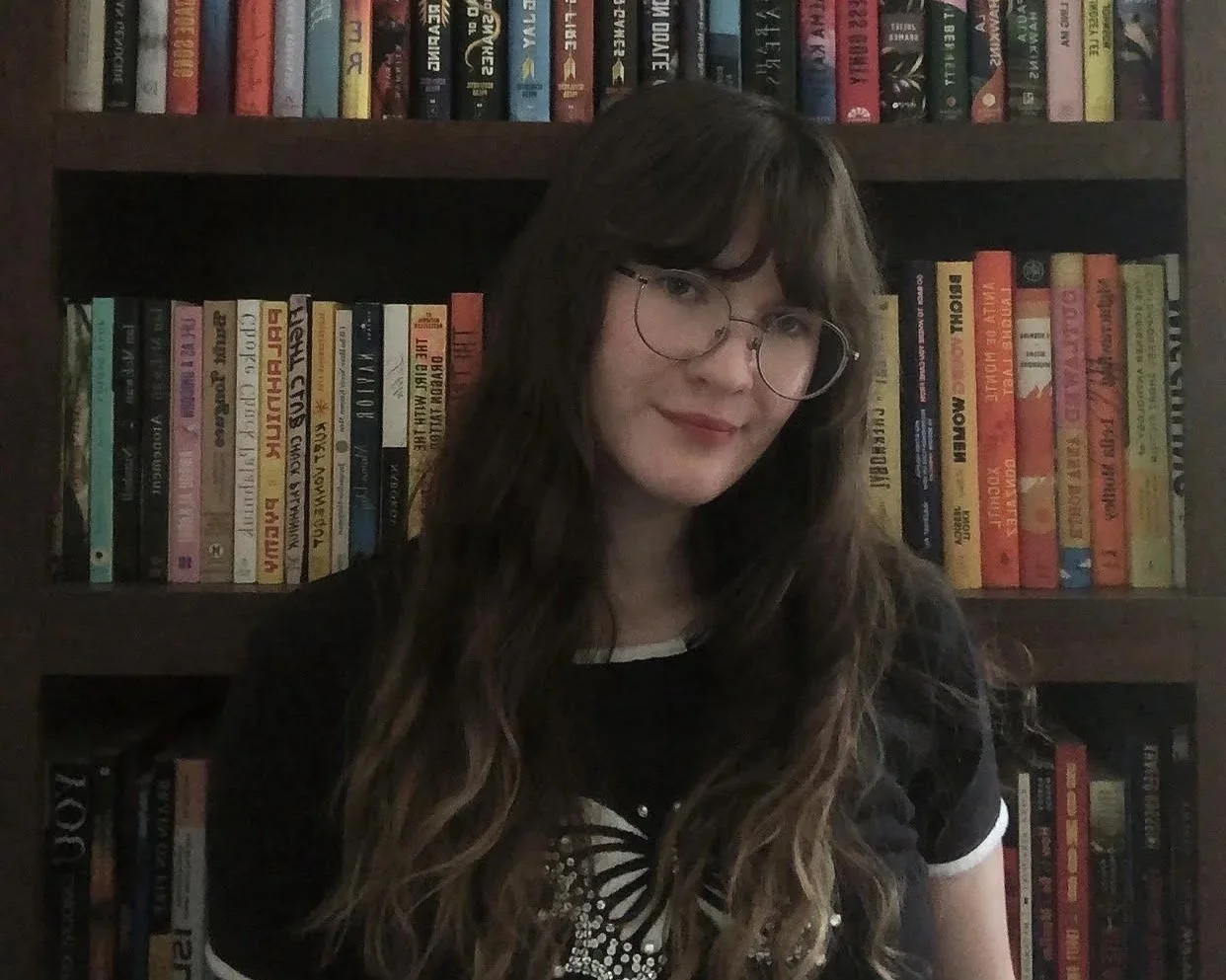
On “Three-Body Problem”: Growing up, my father rarely spoke of his experiences before and during the ethnic cleansing campaign in Bosnia. This year, I mustered the courage to ask him about it, and I finally learned about the day he ran from his village Pahljevići.” —Emra Mehmedović
On “The Widow circa 2006”: This piece was written from a place of sorrow: sorrow for my grandmother's perpetual loneliness and for the life-long partnership that was stolen from her. Despite this, she is a resilient woman, like all of the unbreakable widows of Bosnia. —Emra Mehmedović
Emra Mehmedović is a Kentucky-born, Bosnian-American literary nonfiction writer. At East Tennessee State University, she is working on her MA in English and is an editor of The Mockingbird. Her work has appeared in About Place Journal, Late Night Projections, and is forthcoming in FlowerMouth Press and Vellichor. When she’s not writing or teaching, she is hiking the surrounding Appalachian Mountains—its ridges a newfound inspiration for her work.
